Seward’s council was the council of a man trying to preserve the peace. Lincoln’s calculation was the calculation of a man who understood that preserving the Union might require something other than peace. The death of Stonewall Jackson has been mourned, romanticized, and grieved in Confederate memory as the moment the South lost the war.
The story has always been told as tragedy. A great general cut down by his own men in the dark near Chancellor’sville. the victim of a catastrophic misidentification, dying eight days later from pneumonia in the arm he’d lost to the wounds. And the tragedy is real. But historians fixated so heavily on the emotional weight of that May night in 1863 that they missed what Jackson’s death actually revealed about the Confederate Army of Northern Virginia’s structural brittleleness.
Jackson was irreplaceable. Not just because of his tactical brilliance, but because the Confederate command system had been built around personalities rather than institutions. The Army of Northern Virginia did not have a functional, transferable chain of command. It had Robert E. Lee and a constellation of officers whose value depended entirely on their chemistry with Lee and with each other, with no institutional redundancy beneath them.
When Jackson died, Lee spent the following months searching for someone who could do what Jackson had done. He never found that person. AP Hill was aggressive but erratic. Richard Ule was capable in subordinate roles, but paralyzed when given independent operational command. The second core that Jackson had forged into an instrument of rapid aggressive maneuver became under Ule a hesitant reactive force prone to hesitation at precisely the moments that required boldness.
Within six weeks of Jackson’s death, that transformed core was standing on a ridge above a Pennsylvania town called Gettysburg, failing to push forward and seize high ground that most historians agree Jackson almost certainly would have taken without waiting to be told twice. The tragedy of Jackson’s death was not only his loss.
It was what his absence exposed that the Confederacy’s entire command architecture had always been one man deep. Other armies had depth charts. The Army of Northern Virginia had geniuses, and when its geniuses were gone, the machinery underneath them was not built to compensate. That was not bad luck.
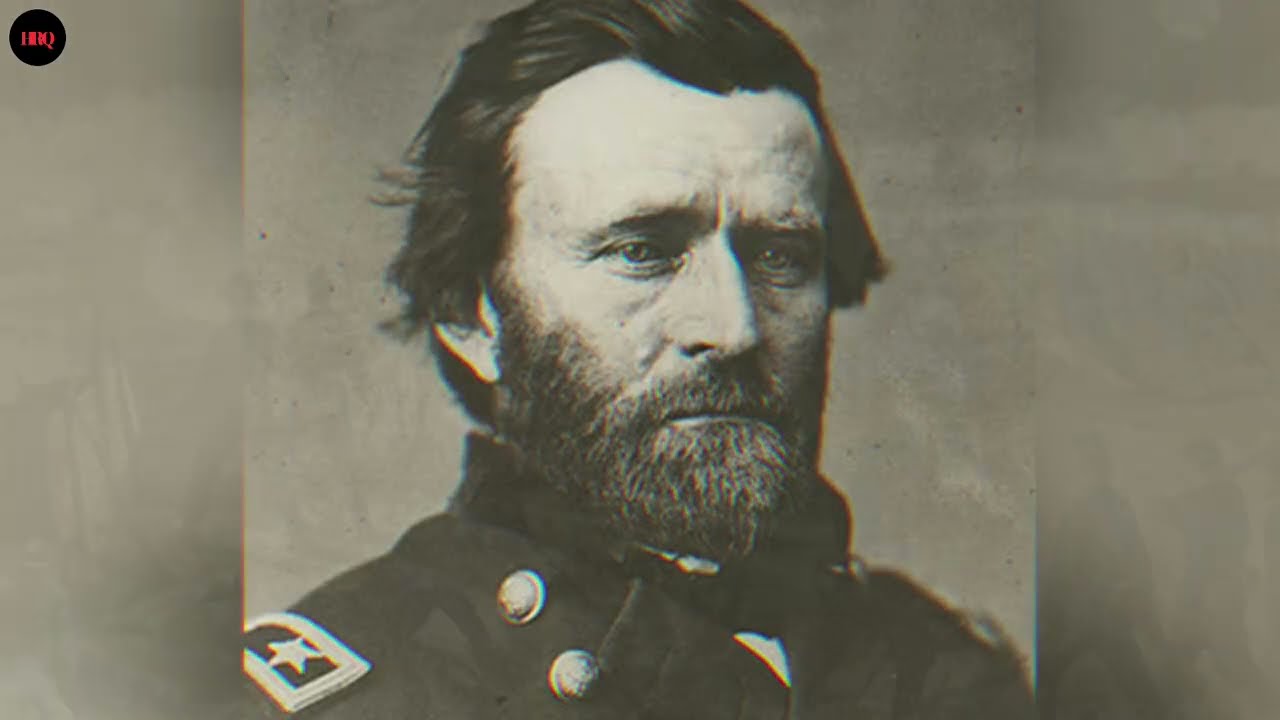
That was a design flaw Robert E. Lee had never been forced to address, and it killed the Confederacy’s best tactical option at the worst possible time. Ulissiz Grant’s reputation as a butcher is one of the most durable myths of the entire war. It was built primarily by lost cause writers who needed a villain to explain why the Confederacy lost, and it has survived far longer than the evidence justifies.
The accusation is that Grant won by throwing men into the meat grinder without strategic thought. Trading lives for a result that a more sophisticated general could have achieved at lower cost. The numbers get used as evidence. The Overland Campaign of 1864 produced staggering Union casualties, approximately 65,000 men over 6 weeks.
That figure, stripped of context, looks like recklessness. In context, it looks entirely different. In that same 6-week period, Confederate casualties drawn from a population with no comparable manpower reserve were proportionally far more damaging to their army’s long-term capacity. Lee lost men he could never replace.
Grant lost men who came off trains from Ohio and New York and Pennsylvania the following week. Grant understood the arithmetic of the war in a way that Lee, for all his tactical genius, refused to. Lee consistently won battles at a cost his army could not absorb over time. Grant consistently fought with an eye toward the war’s final calculus, not its individual engagements.
The men who called him a butcher were measuring a strategic commander by the metrics of tactical elegance. And those are not the same criteria. Grant accepted casualties that looked appalling in the short term because the alternative years of grinding inconclusive warfare while Confederate armies kept the field and southern political will held was not more humane.
It was simply slower. Grant forced the Confederacy to spend itself fighting him. Lee’s genius applied against that pressure was eventually just a form of elegant delay. Pickicket’s charge is remembered as a grand and doomed act of Confederate valor. In the decades after Appamatics, it was elevated into a kind of southern Alamo men walking across a mile of open Pennsylvania field into murderous rifle and artillery fire, brave and noble and defeated.
The mythology though required a scapegoat for why it failed. And that scapegoat was James Longre. According to the Lost Cause architects, primarily Jubel Early and his circle of former Confederate officers riding in the 1870s and 1880s, Long Street had delayed the July 3rd assault out of reluctance, perhaps even deliberate obstruction.
His slow movement that morning had cost the Confederacy the battle and by extension the war. The evidence does not support this. Long Street’s delays on July 3rd were largely technical and logistical, a product of moving troops through unfamiliar terrain on a tight schedule, not attitudinal. More critically, historians who accepted the lost cause framing quietly avoided the more uncomfortable question.
Why was the charge ordered at all? the decision to send roughly 12,000 men across open ground against a fortified Union position on elevated ground after two consecutive days of failed Confederate attacks on both Union flanks was Lee’s decision and Lee’s alone. Long Street advised against it directly on record more than once.
He later wrote that he believed no 15,000 men who ever lived could have taken that position by frontal assault. He was right. Lee ordered it anyway. Because at Gettysburg, Lee was fighting the way he had fought in Virginia with aggressive audacity that had consistently overwhelmed Union commanders who were slower and less decisive than he was.
At Gettysburg, the Army of the PTOAC was commanded by George Meade, who was neither slow nor indecisive, and the Union position on Cemetery Ridge was among the most defensible terrain in the Eastern Theater. Lee ran his standard formula against conditions it was not designed to overcome, and it failed catastrophically.
Roughly half the men who stepped off Seminary Ridge that afternoon did not return. The Confederate offensive capacity in the east never recovered. The real historical failure was not Long Streets. It was the scholarly community’s decadesl long willingness to launder Lee’s worst command decision through the borrowed virtue of southern honor.
The Emancipation Proclamation has been argued about in two opposite directions since the day Lincoln signed it on January 1st, 1863. Critics on one side call it a cynical war measure. It freed enslaved people only in Confederate states, exempted several Union held territories, and had no immediate practical effect because the Union held no authority over Confederate soil.
Admirers on the other side argue it transformed the conflict’s moral character overnight and represents Lincoln’s finest hour. Both readings are incomplete and historians who settled into either camp missed how radically the proclamation changed the mechanics of the war itself. What it did in practical terms was open the door for tens of thousands of black men to enlist as soldiers in the United States Army men whose labor and courage the Union had not yet allowed itself to use.
That is a transformation of military capacity at a moment when enlistment in the North was flagging and Confederate forces were still capable of serious resistance in the field. It also permanently closed the door on European recognition of the Confederacy. Britain and France had been quietly weighing intervention for over a year.
The moment Lincoln framed the war explicitly as a war against slavery, any European government that sided with the Confederacy would have been siding publicly against abolition and the political cost of that position in the wake of Britain’s own abolitionist movement and the democratic upheavalss that had swept the continent in 1848 was more than any government wanted to pay.
The proclamation’s genius was not in what it declared, but in what it foreclosed. Historians who reduced it to either cynicism or idealism missed that it was, in the most complete sense of the word, a weapon. It reshaped the military, isolated the Confederacy diplomatically, and gave the war a moral dimension that made any negotiated compromise, the kind that northern peace democrats were actively demanding politically impossible to sell to a public that had now been told explicitly what the fighting was for. William Tecumpsa
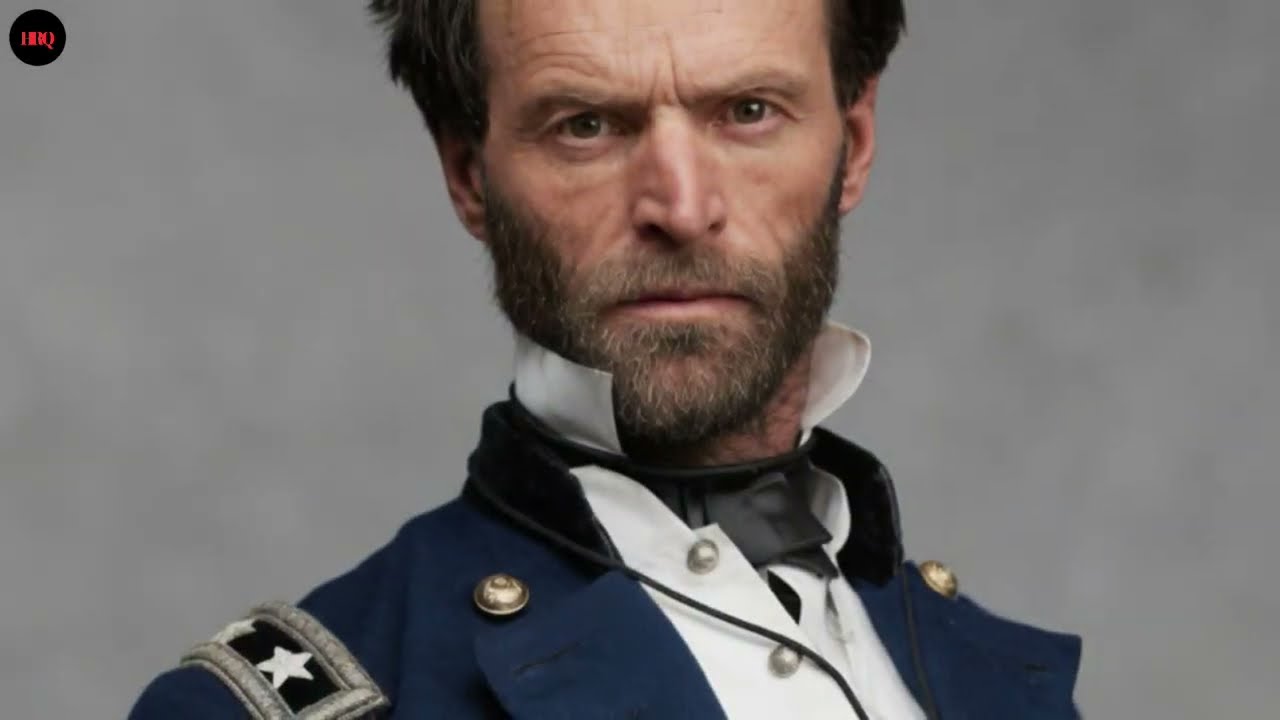
Sherman has been called a war criminal by some historians and a visionary by others. And neither label gets close to what his march to the sea actually was. The traditional condemnation of Sherman focuses on the burning, the destruction of property, the suffering of Georgia and South Carolina civilians in the path of 60,000 Union soldiers, cutting a 60-m wide swath of material ruin.
That destruction was real and Sherman never denied it. But historians who framed the march as undisiplined rampage or as Sherman losing control of men he could no longer govern fundamentally misread the documentary record. Sherman’s orders were precise. He calculated exactly what his army should destroy and what should be left standing.
The railroads and supply depots that fed Confederate armies. Those went the private farms of poor white southerners. Those were treated with considerably more restraint than the mythology suggests. The target was not the southern civilian population as such. It was the Confederate economy and more importantly the Confederate psychology of invincibility.
Sherman had identified something that most of his contemporaries had not yet articulated. The Confederate war effort depended not only on armies in the field, but on the southern homeront’s belief that the war was still winnable and that northern armies could never reach the Confederate heartland.
The march shattered that belief in a way no tactical victory could have. When Sherman’s army walked through Georgia virtually unopposed, it delivered a message to every Confederate soldier still in the trenches that the government they were fighting for could not protect their families, their farms, or their cities. Desertion rates and Confederate armies climbed in direct proportion to where Sherman’s column was reported to be marching.
Letters home from Confederate soldiers in the trenches at Petersburg show men wrestling openly with whether to stay and fight a war their government could no longer shield their families from. Sherman had made staying in the ranks feel like abandonment. This was not chaos. It was a deliberate psychological operation executed at scale.
and Sherman had conceived it as such long before most military thinkers had developed the language to describe what he was doing. George Mlen may be the most unfairly remembered general of the war. The caricature Mlelen as a vain, hesitant, cowardly commander who held every tactical advantage and found reasons not to use any of them was largely constructed by his political enemies while the war was still being fought and has been lazily reprinted ever since.
Lincoln’s frustration with Mlelen was real and justified. The man did not fight when he should have fought. He consistently inflated Confederate troop estimates to justify in an action at one point, claiming Lee had 200,000 men when the real number was closer to 50,000. He clashed with the administration in ways that crossed from disagreement into insubordination.
All of that is documented and true. What the caricature persistently omits is what Mlen actually accomplished. When he took command of the Army of the PTOAC in the summer of 1861, he inherited roughly 35,000 demoralized, unorganized men who had just fled a Confederate army at Bull Run.
He turned them into the largest, best supplied, most professionally organized military force the Western Hemisphere had ever seen. He built the supply networks, the medical infrastructure, the officer training frameworks, and the Aspree decor that gave that army its identity. The army of the PTOAC that Grant used to grind Lee into the Virginia dirt in 1864 was in its bones the army George Mlelen had built three years earlier.
The officers who led core and divisions at Cold Harbor and the siege of Petersburg had learned their trade under Mlen’s command. His failure was not in what he created. It was in his constitutionally deep reluctance to put that creation in harm’s way. That is a significant and disqualifying failure in a wartime commander.
It is also a wholly different failure than the one history handed him. The caricature erased his genuine contributions because his genuine contributions were inconvenient to a narrative that needed a simple villain to explain why the war’s first years went so badly. The truth is more uncomfortable. The Union’s early failures were not primarily Mlelen’s failures.
They were the failures of a government and a military system that had never been designed to fight a war at this scale. and Mlen for all his personal flaws was the man who started building the machine that eventually won it. The question of what caused the Civil War should have been settled the moment historians agreed to read the primary documents.
The Confederacy’s own leadership settled it before the first shot was fired. Alexander Stevens, Confederate Vice President, delivered what became known as the cornerstone speech in Savannah, Georgia in March 1861, weeks before Fort Ser and stated with no ambiguity that the Confederacy’s foundations rested on the principle that the black man was not equal to the white man and that slavery was the Negro’s natural and normal condition.
Jefferson Davis made nearly identical arguments in his own public statements. The secession declarations of Georgia, Mississippi, South Carolina, and Texas each cite the preservation of slavery as their primary motivation in explicit, unmistakable language. And yet for nearly a century after appamatics, a substantial portion of American historical scholarship insisted that the conflict was fundamentally about states rights, tariff disputes, and a southern agrarian civilization under threat from northern industrialism, the lost cause.
Historians did not arrive at this interpretation through honest disagreement over ambiguous evidence. They conducted a sustained organized campaign of revisionism that shaped school curricula, monument construction, textbook approval boards, and the public memory of an entire region for generations. The state’s rights framing was never an innocent difference of scholarly opinion.
It was a political project with a specific goal. rehabilitate the Confederate cause and in doing so provide ideological scaffolding for the systems of legal racial subjugation that replace slavery after reconstruction collapsed. That mainstream American scholarship permitted this framing to stand as a legitimate academic position for as long as it did is one of the most consequential intellectual failures the field has ever produced.
The long-term damage was not only academic. Children across the South and in many northern states were educated for generations in a version of American history in which the Confederacy’s cause was ambiguous, its soldiers honor unimpeachable, and the role of slavery incidental rather than central. Those children grew up to vote, to sit on juries, to run school boards, and to repeat what they had been taught.
Gettysburg is taught as the turning point of the Civil War. The three-day battle in southern Pennsylvania in early July 1863 looms so large in American memory that it has become almost synonymous with the conflict itself. Lee’s great gamble, Pickicket’s broken charge, the moment the tide reversed. The Confederacy, according to this framing, was fatally weakened and set irreversibly on the path toward defeat.
The problem is that this framing was assembled in retrospect by writers who already knew the outcome and it places a burden of singular strategic significance on Gettysburg that the contemporaneous evidence does not fully support. On July 4th, 1863, one day after Pickicket’s charge was repulsed, Vixsburg surrendered.
Ulissiz Grant had completed a campaign of extraordinary operational sophistication that severed the Confederacy along the Mississippi River, cut off its trans Mississippi supply lines, captured an entire Confederate army of 30,000 men, and demonstrated a form of largecale maneuver warfare that bore no resemblance to the grinding frontal engagements that characterize the eastern theater.
By any measure of strategic consequence, the fall of Vixsburg was at least the equal of Gettysburg, and an argument can be made that it was more decisive. Yet, it has never received remotely comparable attention in popular history. The reasons are revealing. Pennsylvania feels geographically and culturally closer to the centers of American memory making than Mississippi.
The Eastern Theater attracted more journalists, more illustrators, more letter writers whose correspondents survived. And Gettysburg offered a clean three-act dramatic structure buildup climax resolution that Vixsburg’s monthslong siege campaign simply did not. History in the end remembered the better story rather than the more important one.
There is also a subtler distortion embedded in the turning point myth by designating Gettysburg as the moment the war turned. Historians have implicitly suggested that the Confederacy’s defeat was inevitable from that July forward that the outcome was sealed and all that remained was the bleeding. That framing removes agency from everyone involved in the following 22 months of fighting.
It diminishes the sacrifices at the wilderness in Spennsylvania, at Atlanta and Nashville, and the James River trenches, treating those battles as epilogue rather than as events that could still have gone differently. The war was not decided at Gettysburg. It was decided over years by thousands of decisions made by men who had no guarantee how any of it would end.
The role of black soldiers in the Union Army is perhaps the most systematically distorted chapter of the Civil War in mainstream American scholarship. The United States colored troops, approximately 180,000 men who served in roughly 175 regiments across every theater of the war were in the decades after Appamatics largely written out of the popular narrative.
The battles they fought, the casualties they absorbed, the strategic and logistical functions they filled were reduced to passing mentions while the war was recast as a conflict primarily between white northerners and white southerners with black Americans appearing as passive recipients of freedom rather than as active agents in their own liberation and in the union survival.
This was not an accidental omission produced by incomplete recordkeeping. The erasure of black military service was a deliberate feature of the same post-war cultural project that built the Lost Cause, a national reconciliation narrative that required both white northerners and white southerners to view each other as honorable opponents, which in turn required removing from the story the men who had taken up arms against the Confederacy specifically because of what it stood for.
the soldiers of the 54th Massachusetts who charged Battery Wagner in July 1863. The black cavalrymen who were frequently the first Union troops to ride into captured Confederate cities. The men of the USCT who held their lines at the Battle of the Crater while Confederate troops attempted to massacre rather than capture them.
These were not peripheral stories. They were central to how the Union won the war. And the historical community’s long reluctance to fully reckon with that centrality says as much about the history of American historioggraphy as it does about the war itself. What the eraser of black military service really accomplished was to leave the country with a version of the Civil War in which black people were acted upon, but never actors aversion that fit neatly with the racial order that followed reconstruction’s destruction and persisted with varying
degrees of brutality well into the 20th century. What the Civil War ultimately reveals when you strip away the accumulated mythology of 160 years is a conflict far more morally stark, far more strategically complex, and far more racially definitive than the version most Americans encountered in school.