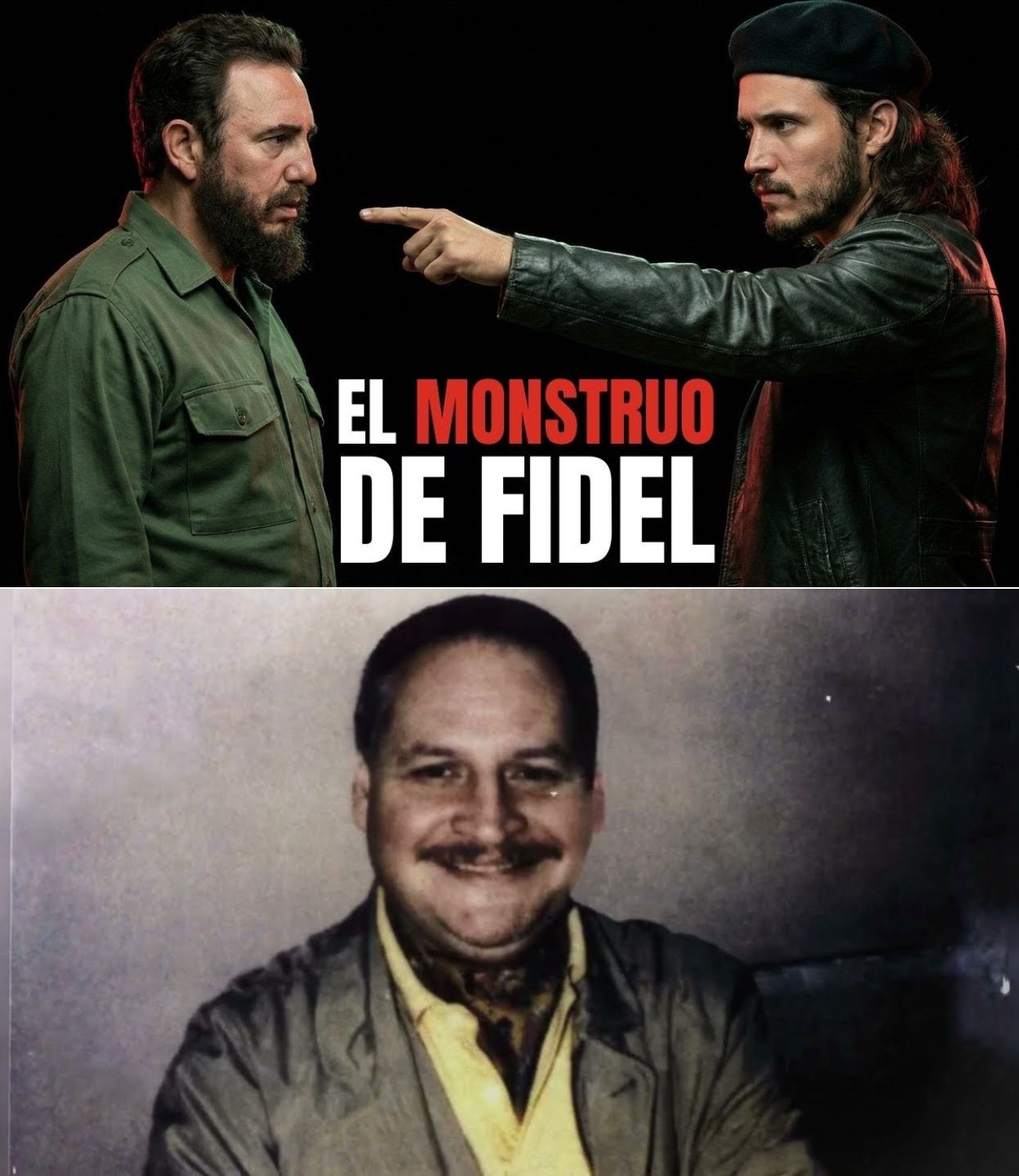
1975, Vienna, Austria, OPEC headquarters. A man enters with a machine gun. Five more terrorists are following him. They shout in Arabic, shoot at the ceiling, take 70 hostages, including the most powerful oil ministers in the world: Saudi Arabia, Iran, Iraq, Kuwait, Venezuela. The terrorist leader identifies himself.
I am Carlos, I represent the Palestinian Revolution. Carlos Pelo Negro, 26 years old, Venezuelan accent when he speaks Spanish. For 48 hours it keeps the world in suspense. He kills three people, demands a plane, flies hostages to Algeria, negotiates, releases ministers, disappears with $50 million. The most audacious kidnapping in history.
And in Havana, Fidel Castro nervously watches television . Why nervous? Because that terrorist Carlos was trained in Cuba in 1966. Fidel personally met him, found him brilliant, sent him to training camps, connected him with the KGB, and helped create the man the world now calls the Jackal. But in 1975, Fidel is afraid because Carlos is too visible, too violent, too famous, and the CIA is watching, connecting the dots, tracing Carlos back to Cuba.
Fidel cannot publicly admit his connection, so he does something. Carlos’s distance from Cuba , he denies it, abandons him, and Carlos, feeling betrayed, becomes more dangerous. For 20 years, from 1970 to 1990, Carlos was the world’s most wanted terrorist . It has killed more than 80 people and operates in 15 countries. Nobody can catch him.
Stay with me because what we’re going to analyze today is the story of how Fidel created a monster and then had to hide from it. I’m going to explain who Carlos was before he became the jackal. I’m going to tell you how he was trained in Cuba and what Fidel promised. And what will shock you the most is why Fidel abandoned him and how Carlos took revenge.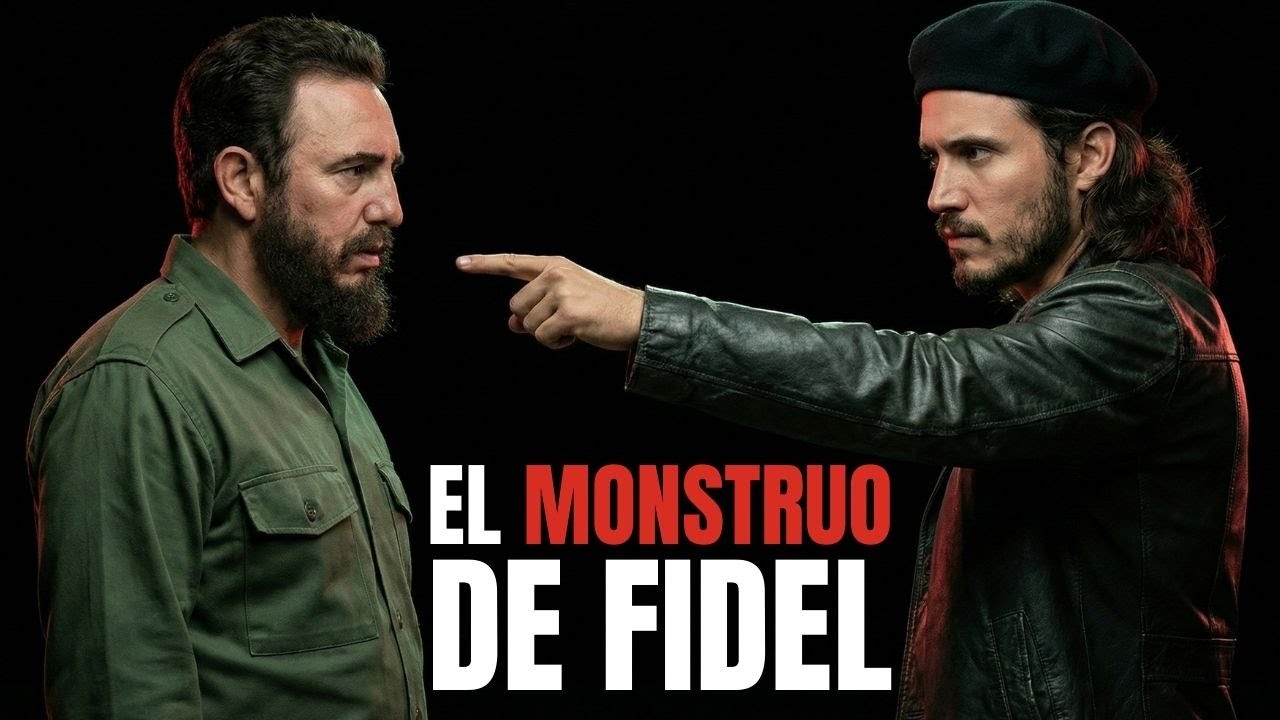
This is the man Fidel created and then feared. To understand what happened at that meeting, you first need to understand who this man was. Ilicich Ramírez Sánchez was born on October 12, 1949 in Caracas, Venezuela. Upper middle class family, father a Marxist lawyer, mother a Catholic. His father, José Altagracia Ramírez, was a fanatical communist.
He admired Lenin so much that he named his three sons after him: Ilich, Lenin, and Vladimir. Yes, all three brothers have communist names. Ilic, our Carlos, was raised with revolutionary ideology from childhood. His father used to take him to meetings of the Venezuelan Communist Party. He taught her about imperialism, class struggle, and armed revolution.
At 14, Ilic was already an activist. He distributed Marxist pamphlets in Caracas. 1964, Venezuela is in political tension. Active left-wing guerrillas. I’s father is connected to these guerrillas and decides that his children should be trained as professional revolutionaries. In 1966, Ilic was 17 years old.
His father sends him to Cuba. Destination camp for my guerrilla training. Fidel Castro had established these camps to train foreign revolutionaries, Latin Americans, Africans, Arabs. They all came to Cuba to learn guerrilla warfare. Ilic arrives at a field near Pinar del Río. Hard training, very hard. Weapons, explosives, ambush tactics, jungle survival and more.
Intensive revolutionary ideology. Required reading of Marx, Lenin, Cheegevara, Mao. Daily indoctrination on anti-imperialist struggle. Iich absorbs everything. He is a brilliant student, physically strong, mentally sharp, and charismatic. The Cuban instructors notice his potential.
They report to superiors; this Venezuelan is special. And the report reaches Fidel. Fidel, always interested in promising revolutionaries, asks to meet him. 1967. Iich is taken to a meeting with Fidel in Havana. The meeting lasts approximately one hour. Fidel asks questions. Ilic responds confidently. They talk about revolution in Venezuela, about guerrilla strategy, about anti-imperialism.
Fidel is impressed, he tells Iich. You have a bright future in the world revolution, but you need more training. I’m going to send you to Moscow. Ilic is excited. Moscow means the big leagues. The KGB, Patrice Lumumba University. Elite training. Fidel makes the arrangements, using his connections with the Soviet Union.
In 1968, Ilic traveled to Moscow and here began his true transformation into Carlos the Jackal. Moscow. 1968. Ilicich Ramírez arrives at Patricia Lumumba University. This university was created by the Soviet Union to train revolutionaries from the third world, students from Africa, Asia, Latin America, all with leftist ideology.
The official curriculum, languages, history, economics, politics. The secret curriculum, intelligence training, clandestine operations. Iich studies languages, he learns Russian, French, Arabic. He will eventually speak six languages fluently, but more importantly, he is recruited by the KGB, not as a formal agent, but as a useful asset.
The KGB identifies students with potential for future operations. Ilicich is perfect, intelligent, ideological, and fearless. Receive additional secret training. Document forgery, use of explosives, assassination tactics. Encrypted communication. 1970. Ilicich joins the Popular Front for the Liberation of Palestine.
This is a Palestinian terrorist group led by Wadi Hadad. The PFLP is known for airplane hijackings and attacks in Europe. Ilic sees this as an opportunity to move from theory to action. Wadi Hadad accepts it. He sends him to training camps in Jordan and Lebanon. More military training, more connections with international terrorist networks .
And here Ilicich adopts a nom de guerre, Carlos. Why Carlos? Several possible origins. One, a fake passport with that name. Two, admiration for Che, whose real name was Ernesto. But there was Carlos in his family. From 1971 to 1973, Carlos operated in Europe as a sleeper agent for the PFLP.
He lived in London, then Paris. He moves between cities, establishes networks, acquires weapons, identifies targets, and here comes the dark twist. He starts killing. 1973. First confirmed murder. Joseph Edward Sif, British Jewish businessman. Carlos shoots SIF at his home in London. Sif miraculously survives. Carlos escapes.
British police begin tracking him, but they don’t know who he is yet. 1974. Carlos kills two French intelligence agents in Paris. They had discovered his identity. They went to arrest him. Carlos opens fire, kills two, wounds a third, and escapes. He is now wanted internationally. Interpol issues alert and the media begin to call him the jackal.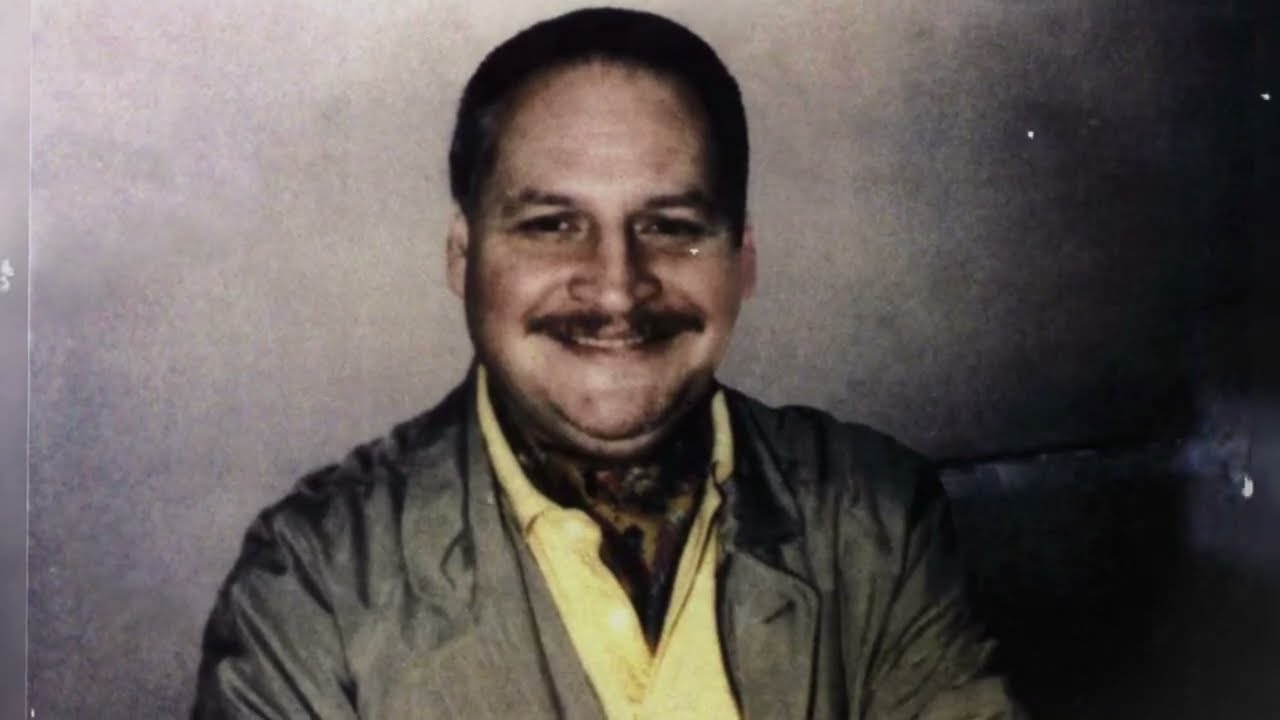
The name comes from Frederick Forsight’s novel, The Day of the Jackal, about a professional assassin. Press sees similarities. Carlos is cold, professional, and elusive. The nickname sticks. Carlos hugs him. During this time, where is Fidel? What do you think of Carlos? Fidel is following Carlos’s career with mixed interest. On one hand, proud.
I helped train him, on the other hand, worried. Carlos is too conspicuous, very violent. Fidel prefers revolutionaries who operate in the shadows, guerrillas in Latin American jungles, clandestine movements, not terrorists who appear on the front pages of European newspapers.
Because paying attention to Carlos means paying attention to his connections, and one of those connections leads to Cuba. The CIA is investigating Carlos, tracing his history. They discover. Trained in Cuba from 1966 to 1967, he met Fidel. This is embarrassing for Fidel. Cuba officially denies supporting terrorism, but here is the evidence.
The world’s most famous terrorist was trained in Cuba. Fidel begins to publicly distance himself. Official Cuban statements. We don’t know any Carlos. Cuba does not support terrorism. But privately, some Cuban officials maintain contact with Carlos, occasionally passing him information and giving him temporary refuge in Cuban embassies.
It’s a complicated relationship, unofficial, but real. And everything exploded in 1975 with the OPEC hijacking. December 21, 1975. Vienna, Austria. Carlos leads his boldest operation yet: Kidnapping of OPEC ministers. I’m going to explain exactly how this operation happened, because it’s what made him a legend. 11:40 in the morning.
Carlos and five terrorists enter the OPEC building. Two Germans, two Palestinians, one Lebanese. Fake uniforms. Sports bags with weapons. They go up to the second floor. Conference room where the ministers are gathered. Carlos kicks the door, shouts in German. This is a kidnapping. To the ground.
Fires a burst of machine gun fire at the ceiling. Total panic. 70 people in the room. Ministers, guards, secretaries. In seconds, Carlos takes control. Three people try to resist. Carlos kills them without hesitation. An Austrian policeman. An Iraqi bodyguard. A Libyan economist. Clear message. Do not resist or die. The rest obeys.
They throw themselves to the ground. Carlos identifies the key ministers. Yamani from Saudi Arabia. The most important one controls more oil than any other in the world. Amusegar of Iran. Second most important. Carlos declares, we represent the Palestinian revolution. We are here for justice for our people. It requires three things.
First, a plane to leave Austria with hostages. Second, a statement read on the radio about the Palestinian cause. Third, the release of Palestinian prisoners in Europe. Austria is in shock. Austrian government negotiates. They have no choice. The ministers are too important. If they die, it will be a massive international crisis.
Oil, global economy. 4 pm. Government accepts Carlos’s terms. The Austrian Airlines Boeing 77 aircraft is being prepared. 8 pm, Carlos and terrorists take hostages to the airport. 42 hostages board the plane, including the ministers plus the six terrorists. They take off. Destination. Algeria. Carlos is calm on the plane.
Talk to ministers. Yamani later reported. Carlos was polite, spoke fluent Arabic, discussed international politics, but he was also clear: if governments did not cooperate, he would kill us. First stop, Libya. Gaddafi receives the plane. Brief meeting. Next stop, Algeria.
Here the final negotiations begin . Carlos demands $50 million in total ransom. Saudi Arabia and Iran pay; they have no choice. December 27. After 6 days, Carlos releases all the hostages in Algeria. He disappears with the money. Successful operation. Zero. Terrorists captured or killed. The West is horrified. This is terrorism on an unprecedented scale.
Kidnapping oil ministers in Europe with impunity. Carlos becomes the world’s most famous terrorist . She appears on the cover of Time Magazine, Newsweek, and Lemond. Interpol increases reward for his capture and crucially investigators begin tracing his connections. Who trained this man? Who supports him? Clues lead to Cuba, the Soviet Union, Libya, and Syria.
Fidel is furious, but not with Carlos, with the situation, because now Cuba is in the headlines. Cuba trained Carlos the Jackal. Western intelligence reports confirm, yes. Fidel faces diplomatic pressure. The United States uses this as evidence that Cuba exports terrorism. The Soviet Union is also uncomfortable.
They don’t want public association with such a visible terrorist. Then Fidel makes the decision to cut all ties with Carlos. Instruction to Cuban intelligence. No more contact, no more help. He doesn’t exist for us. When Carlos finds out, he feels betrayed. For years they told him, “You are a soldier of the World Revolution.
Cuba will always support you. Now, when he is more famous and more wanted, Cuba abandons him.” So Carlos decides, “If they abandon me, I operate independently and it becomes more dangerous.” After Vienna, Carlos operated as an independent mercenary terrorist for almost 20 years. I’m going to tell you about the most significant attacks and how he was finally captured.
From 1976 to 1982, Carlos lived between Syria, Libya, and South Yemen. Governments that support terrorism give him refuge in exchange for him doing work for them. 1982. Attack in Paris. Bomb on train. Capitol. Five dead, 77 injured. Carlos is the prime suspect, but there is no direct proof. 1983. Attack in Marseille.
Bomb at train station. Two dead. 34 injured. Carlos is suspicious again. During these years he killed approximately 15 to 20 more people in several attacks. He also kidnaps, extorts, and traffics weapons. He becomes rich, very rich. Millions of dollars. He lives in luxury when he is in countries that protect him.
Expensive cars, women, parties, but always on the move, never staying in one place for long . From 1985 to 1990, Carlos was mainly in Libya under Gaddafi’s protection. Gaddafi uses Carlos for operations in Europe, but the relationship is tense. Gaddafi is unpredictable. 1990. Fall of the Berlin Wall, collapse of the Soviet Union.
The world is changing, the Cold War is ending, and Cold War terrorists like Carlos are left without allies. Countries that previously protected it now want to get rid of it. Too dangerous. Too much Western attention. From 1991 to 1994, Carlos hid in Sudan, the last country willing to tolerate him.
He lives under the protection of Sudan’s Islamist government , but is becoming increasingly isolated. His old contacts are either dead or retired. New generations of terrorists, Al-Qaeda and others do not respect it. For them, Carlos is a relic of a bygone era, and Western intelligence services are closing in on him , especially France.
They have a massive file on Carlos. They know he’s in Sudan. 1994. French intelligence secretly negotiates with the Sudanese government. Offer: normalization of relations, more money, more military aid. In exchange, hand over Carlos. Sudan accepts. Carlos is too expensive to maintain. August 14, 1994. Sudanese agents capture Carlos, drug him, put him in a sack, and take him to the airport.
French plane waiting, they take it up. Fly direct to Paris. Carlos wakes up handcuffed in a French prison. After 25 years, the most wanted terrorist was finally captured. 1997, first trial. Sentenced to life imprisonment for the murder of two French agents in 1975. Second trial, convicted for attacks in 1982 and 1983. Third trial.
Another life sentence for the 1974 attack. Today in 2025, Carlos is 75 years old, still in a French prison. He has given interviews from prison. He declares himself a revolutionary, not a terrorist. He says he does n’t regret anything. I fought against imperialism. I would do it all again. But he has also expressed bitterness about Cuba.
In a 2003 interview, Fidel said, “He used me, trained me, and then abandoned me when it was convenient.” Cuba says it does not support terrorism. That’s a lie, they created me. These statements embarrass Cuba to this day. Ultimately, Carlos the Jackal is a product of the Cold War, trained by Cuba, refined by the KGB, and used by Palestinians, Libyans, and Syrians.
And when the Cold War ended, everyone abandoned him. Fidel, especially, because Fidel was always pragmatic. While Carlos was helpful and discreet, Fidel supported him indirectly. But when Carlos became too famous, too dangerous, too visible, Fidel cut him off and Carlos paid the price.
25 years on the run, now life imprisonment. But Carlos’s story reveals something important about Fidel and Cuba. Cuba did train terrorists. Cuba did export violent revolution, not only in Latin America, but throughout the world. Carlos is just the most famous, but there were hundreds more. Trained in Cuban camps, sent to operate globally.
Some successful, many dead, some forgotten. Carlos survived long enough to be captured and from prison he tells the truth that Cuba wants to hide. Fidel created me and then became afraid of me. Now I’d like to know what you think. Do you think Fidel had the right to abandon Carlos when he became too dangerous? Or do you think Fidel is responsible for all the crimes Carlos committed? Do you think Carlos is a terrorist or a revolutionary? Would you have trained foreign revolutionaries if you were a leader like Fidel?
Leave your opinion in the comments. If this analysis impacted you, I invite you to subscribe, activate the bell, and share. The story of Carlos the Jackal deserves to be told. And if you found this story of espionage and secret operations interesting, let me know in the comments. There are many more Cold War stories I could tell. KGB CIA Mossad.
Operations that changed the world. I’ll see you in the next video. Carlos the Jackal, trained by Fidel, abandoned by Fidel, feared by Fidel. Today, the most famous terrorist of the Cold War turns 75 in a French prison. See you soon.
(111) 🔥 El MONSTRUO Que FIDEL Entrenó En CUBA | CARLOS THE JACKAL: 80 Muertos En Europa – YouTube
Transcripts:
1975, Vienna, Austria, OPEC headquarters. A man enters with a machine gun. Five more terrorists are following him. They shout in Arabic, shoot at the ceiling, take 70 hostages, including the most powerful oil ministers in the world: Saudi Arabia, Iran, Iraq, Kuwait, Venezuela. The terrorist leader identifies himself.
I am Carlos, I represent the Palestinian Revolution. Carlos Pelo Negro, 26 years old, Venezuelan accent when he speaks Spanish. For 48 hours it keeps the world in suspense. He kills three people, demands a plane, flies hostages to Algeria, negotiates, releases ministers, disappears with $50 million. The most audacious kidnapping in history.
And in Havana, Fidel Castro nervously watches television . Why nervous? Because that terrorist Carlos was trained in Cuba in 1966. Fidel personally met him, found him brilliant, sent him to training camps, connected him with the KGB, and helped create the man the world now calls the Jackal. But in 1975, Fidel is afraid because Carlos is too visible, too violent, too famous, and the CIA is watching, connecting the dots, tracing Carlos back to Cuba.
Fidel cannot publicly admit his connection, so he does something. Carlos’s distance from Cuba , he denies it, abandons him, and Carlos, feeling betrayed, becomes more dangerous. For 20 years, from 1970 to 1990, Carlos was the world’s most wanted terrorist . It has killed more than 80 people and operates in 15 countries. Nobody can catch him.
Stay with me because what we’re going to analyze today is the story of how Fidel created a monster and then had to hide from it. I’m going to explain who Carlos was before he became the jackal. I’m going to tell you how he was trained in Cuba and what Fidel promised. And what will shock you the most is why Fidel abandoned him and how Carlos took revenge.
This is the man Fidel created and then feared. To understand what happened at that meeting, you first need to understand who this man was. Ilicich Ramírez Sánchez was born on October 12, 1949 in Caracas, Venezuela. Upper middle class family, father a Marxist lawyer, mother a Catholic. His father, José Altagracia Ramírez, was a fanatical communist.
He admired Lenin so much that he named his three sons after him: Ilich, Lenin, and Vladimir. Yes, all three brothers have communist names. Ilic, our Carlos, was raised with revolutionary ideology from childhood. His father used to take him to meetings of the Venezuelan Communist Party. He taught her about imperialism, class struggle, and armed revolution.
At 14, Ilic was already an activist. He distributed Marxist pamphlets in Caracas. 1964, Venezuela is in political tension. Active left-wing guerrillas. I’s father is connected to these guerrillas and decides that his children should be trained as professional revolutionaries. In 1966, Ilic was 17 years old.
His father sends him to Cuba. Destination camp for my guerrilla training. Fidel Castro had established these camps to train foreign revolutionaries, Latin Americans, Africans, Arabs. They all came to Cuba to learn guerrilla warfare. Ilic arrives at a field near Pinar del Río. Hard training, very hard. Weapons, explosives, ambush tactics, jungle survival and more.
Intensive revolutionary ideology. Required reading of Marx, Lenin, Cheegevara, Mao. Daily indoctrination on anti-imperialist struggle. Iich absorbs everything. He is a brilliant student, physically strong, mentally sharp, and charismatic. The Cuban instructors notice his potential.
They report to superiors; this Venezuelan is special. And the report reaches Fidel. Fidel, always interested in promising revolutionaries, asks to meet him. 1967. Iich is taken to a meeting with Fidel in Havana. The meeting lasts approximately one hour. Fidel asks questions. Ilic responds confidently. They talk about revolution in Venezuela, about guerrilla strategy, about anti-imperialism.
Fidel is impressed, he tells Iich. You have a bright future in the world revolution, but you need more training. I’m going to send you to Moscow. Ilic is excited. Moscow means the big leagues. The KGB, Patrice Lumumba University. Elite training. Fidel makes the arrangements, using his connections with the Soviet Union.
In 1968, Ilic traveled to Moscow and here began his true transformation into Carlos the Jackal. Moscow. 1968. Ilicich Ramírez arrives at Patricia Lumumba University. This university was created by the Soviet Union to train revolutionaries from the third world, students from Africa, Asia, Latin America, all with leftist ideology.
The official curriculum, languages, history, economics, politics. The secret curriculum, intelligence training, clandestine operations. Iich studies languages, he learns Russian, French, Arabic. He will eventually speak six languages fluently, but more importantly, he is recruited by the KGB, not as a formal agent, but as a useful asset.
The KGB identifies students with potential for future operations. Ilicich is perfect, intelligent, ideological, and fearless. Receive additional secret training. Document forgery, use of explosives, assassination tactics. Encrypted communication. 1970. Ilicich joins the Popular Front for the Liberation of Palestine.
This is a Palestinian terrorist group led by Wadi Hadad. The PFLP is known for airplane hijackings and attacks in Europe. Ilic sees this as an opportunity to move from theory to action. Wadi Hadad accepts it. He sends him to training camps in Jordan and Lebanon. More military training, more connections with international terrorist networks .
And here Ilicich adopts a nom de guerre, Carlos. Why Carlos? Several possible origins. One, a fake passport with that name. Two, admiration for Che, whose real name was Ernesto. But there was Carlos in his family. From 1971 to 1973, Carlos operated in Europe as a sleeper agent for the PFLP.
He lived in London, then Paris. He moves between cities, establishes networks, acquires weapons, identifies targets, and here comes the dark twist. He starts killing. 1973. First confirmed murder. Joseph Edward Sif, British Jewish businessman. Carlos shoots SIF at his home in London. Sif miraculously survives. Carlos escapes.
British police begin tracking him, but they don’t know who he is yet. 1974. Carlos kills two French intelligence agents in Paris. They had discovered his identity. They went to arrest him. Carlos opens fire, kills two, wounds a third, and escapes. He is now wanted internationally. Interpol issues alert and the media begin to call him the jackal.
The name comes from Frederick Forsight’s novel, The Day of the Jackal, about a professional assassin. Press sees similarities. Carlos is cold, professional, and elusive. The nickname sticks. Carlos hugs him. During this time, where is Fidel? What do you think of Carlos? Fidel is following Carlos’s career with mixed interest. On one hand, proud.
I helped train him, on the other hand, worried. Carlos is too conspicuous, very violent. Fidel prefers revolutionaries who operate in the shadows, guerrillas in Latin American jungles, clandestine movements, not terrorists who appear on the front pages of European newspapers.
Because paying attention to Carlos means paying attention to his connections, and one of those connections leads to Cuba. The CIA is investigating Carlos, tracing his history. They discover. Trained in Cuba from 1966 to 1967, he met Fidel. This is embarrassing for Fidel. Cuba officially denies supporting terrorism, but here is the evidence.
The world’s most famous terrorist was trained in Cuba. Fidel begins to publicly distance himself. Official Cuban statements. We don’t know any Carlos. Cuba does not support terrorism. But privately, some Cuban officials maintain contact with Carlos, occasionally passing him information and giving him temporary refuge in Cuban embassies.
It’s a complicated relationship, unofficial, but real. And everything exploded in 1975 with the OPEC hijacking. December 21, 1975. Vienna, Austria. Carlos leads his boldest operation yet: Kidnapping of OPEC ministers. I’m going to explain exactly how this operation happened, because it’s what made him a legend. 11:40 in the morning.
Carlos and five terrorists enter the OPEC building. Two Germans, two Palestinians, one Lebanese. Fake uniforms. Sports bags with weapons. They go up to the second floor. Conference room where the ministers are gathered. Carlos kicks the door, shouts in German. This is a kidnapping. To the ground.
Fires a burst of machine gun fire at the ceiling. Total panic. 70 people in the room. Ministers, guards, secretaries. In seconds, Carlos takes control. Three people try to resist. Carlos kills them without hesitation. An Austrian policeman. An Iraqi bodyguard. A Libyan economist. Clear message. Do not resist or die. The rest obeys.
They throw themselves to the ground. Carlos identifies the key ministers. Yamani from Saudi Arabia. The most important one controls more oil than any other in the world. Amusegar of Iran. Second most important. Carlos declares, we represent the Palestinian revolution. We are here for justice for our people. It requires three things.
First, a plane to leave Austria with hostages. Second, a statement read on the radio about the Palestinian cause. Third, the release of Palestinian prisoners in Europe. Austria is in shock. Austrian government negotiates. They have no choice. The ministers are too important. If they die, it will be a massive international crisis.
Oil, global economy. 4 pm. Government accepts Carlos’s terms. The Austrian Airlines Boeing 77 aircraft is being prepared. 8 pm, Carlos and terrorists take hostages to the airport. 42 hostages board the plane, including the ministers plus the six terrorists. They take off. Destination. Algeria. Carlos is calm on the plane.
Talk to ministers. Yamani later reported. Carlos was polite, spoke fluent Arabic, discussed international politics, but he was also clear: if governments did not cooperate, he would kill us. First stop, Libya. Gaddafi receives the plane. Brief meeting. Next stop, Algeria.
Here the final negotiations begin . Carlos demands $50 million in total ransom. Saudi Arabia and Iran pay; they have no choice. December 27. After 6 days, Carlos releases all the hostages in Algeria. He disappears with the money. Successful operation. Zero. Terrorists captured or killed. The West is horrified. This is terrorism on an unprecedented scale.
Kidnapping oil ministers in Europe with impunity. Carlos becomes the world’s most famous terrorist . She appears on the cover of Time Magazine, Newsweek, and Lemond. Interpol increases reward for his capture and crucially investigators begin tracing his connections. Who trained this man? Who supports him? Clues lead to Cuba, the Soviet Union, Libya, and Syria.
Fidel is furious, but not with Carlos, with the situation, because now Cuba is in the headlines. Cuba trained Carlos the Jackal. Western intelligence reports confirm, yes. Fidel faces diplomatic pressure. The United States uses this as evidence that Cuba exports terrorism. The Soviet Union is also uncomfortable.
They don’t want public association with such a visible terrorist. Then Fidel makes the decision to cut all ties with Carlos. Instruction to Cuban intelligence. No more contact, no more help. He doesn’t exist for us. When Carlos finds out, he feels betrayed. For years they told him, “You are a soldier of the World Revolution.
Cuba will always support you. Now, when he is more famous and more wanted, Cuba abandons him.” So Carlos decides, “If they abandon me, I operate independently and it becomes more dangerous.” After Vienna, Carlos operated as an independent mercenary terrorist for almost 20 years. I’m going to tell you about the most significant attacks and how he was finally captured.
From 1976 to 1982, Carlos lived between Syria, Libya, and South Yemen. Governments that support terrorism give him refuge in exchange for him doing work for them. 1982. Attack in Paris. Bomb on train. Capitol. Five dead, 77 injured. Carlos is the prime suspect, but there is no direct proof. 1983. Attack in Marseille.
Bomb at train station. Two dead. 34 injured. Carlos is suspicious again. During these years he killed approximately 15 to 20 more people in several attacks. He also kidnaps, extorts, and traffics weapons. He becomes rich, very rich. Millions of dollars. He lives in luxury when he is in countries that protect him.
Expensive cars, women, parties, but always on the move, never staying in one place for long . From 1985 to 1990, Carlos was mainly in Libya under Gaddafi’s protection. Gaddafi uses Carlos for operations in Europe, but the relationship is tense. Gaddafi is unpredictable. 1990. Fall of the Berlin Wall, collapse of the Soviet Union.
The world is changing, the Cold War is ending, and Cold War terrorists like Carlos are left without allies. Countries that previously protected it now want to get rid of it. Too dangerous. Too much Western attention. From 1991 to 1994, Carlos hid in Sudan, the last country willing to tolerate him.
He lives under the protection of Sudan’s Islamist government , but is becoming increasingly isolated. His old contacts are either dead or retired. New generations of terrorists, Al-Qaeda and others do not respect it. For them, Carlos is a relic of a bygone era, and Western intelligence services are closing in on him , especially France.
They have a massive file on Carlos. They know he’s in Sudan. 1994. French intelligence secretly negotiates with the Sudanese government. Offer: normalization of relations, more money, more military aid. In exchange, hand over Carlos. Sudan accepts. Carlos is too expensive to maintain. August 14, 1994. Sudanese agents capture Carlos, drug him, put him in a sack, and take him to the airport.
French plane waiting, they take it up. Fly direct to Paris. Carlos wakes up handcuffed in a French prison. After 25 years, the most wanted terrorist was finally captured. 1997, first trial. Sentenced to life imprisonment for the murder of two French agents in 1975. Second trial, convicted for attacks in 1982 and 1983. Third trial.
Another life sentence for the 1974 attack. Today in 2025, Carlos is 75 years old, still in a French prison. He has given interviews from prison. He declares himself a revolutionary, not a terrorist. He says he does n’t regret anything. I fought against imperialism. I would do it all again. But he has also expressed bitterness about Cuba.
In a 2003 interview, Fidel said, “He used me, trained me, and then abandoned me when it was convenient.” Cuba says it does not support terrorism. That’s a lie, they created me. These statements embarrass Cuba to this day. Ultimately, Carlos the Jackal is a product of the Cold War, trained by Cuba, refined by the KGB, and used by Palestinians, Libyans, and Syrians.
And when the Cold War ended, everyone abandoned him. Fidel, especially, because Fidel was always pragmatic. While Carlos was helpful and discreet, Fidel supported him indirectly. But when Carlos became too famous, too dangerous, too visible, Fidel cut him off and Carlos paid the price.
25 years on the run, now life imprisonment. But Carlos’s story reveals something important about Fidel and Cuba. Cuba did train terrorists. Cuba did export violent revolution, not only in Latin America, but throughout the world. Carlos is just the most famous, but there were hundreds more. Trained in Cuban camps, sent to operate globally.
Some successful, many dead, some forgotten. Carlos survived long enough to be captured and from prison he tells the truth that Cuba wants to hide. Fidel created me and then became afraid of me. Now I’d like to know what you think. Do you think Fidel had the right to abandon Carlos when he became too dangerous? Or do you think Fidel is responsible for all the crimes Carlos committed? Do you think Carlos is a terrorist or a revolutionary? Would you have trained foreign revolutionaries if you were a leader like Fidel?
Leave your opinion in the comments. If this analysis impacted you, I invite you to subscribe, activate the bell, and share. The story of Carlos the Jackal deserves to be told. And if you found this story of espionage and secret operations interesting, let me know in the comments. There are many more Cold War stories I could tell. KGB CIA Mossad.
Operations that changed the world. I’ll see you in the next video. Carlos the Jackal, trained by Fidel, abandoned by Fidel, feared by Fidel. Today, the most famous terrorist of the Cold War turns 75 in a French prison. See you soon.
Disclaimer : This content may be created by AI for entertainment purposes. Any resemblance to real persons, events, or places is coincidental.
