I do n’t know how much time passed, just long enough for the wind to die down from the canyon. and move the pine needles. Enough to make the eagle stop panting so loudly, enough for me to know that I couldn’t leave her there like the other six had done. I took off the serape. The cold hit my shoulders immediately, but that was the least of my worries.
If I was going to approach a wounded eagle, I needed something to cover its head, not to hurt it, but to calm it down. My dad taught me that too. Cover their eyes and they stay still. They don’t see the danger and stop fighting. I tied the serape around my hands. I took two steps forward and the eagle raised its beak barely a centimeter.
Not to attack, but to look at me better. ” Yes, girl,” I said, without knowing why I was talking to her. I’m not going to hurt you. She couldn’t understand me, but I needed to say it because there was something in that amber eye that wasn’t just tiredness, it was a long wait, as if she had been accepting for hours that no one was going to stop until someone finally did.
I slowly tied the serape around my hands, like someone preparing a bandage before touching a wound they do n’t know. The eagle did not move. Only that amber-colored eye followed my every move. I knelt to her left, on the side of the good wing, so as not to put any more pressure on the wire that had her trapped. The wind came down from the canyon and brought me the smell of pine and dry earth.
The girl smelled of feathers and something older, of a storm held within her wings. Hold on, girl, I won’t be long. I carefully placed the serape over his head , covering his eyes without squeezing. As soon as darkness covered its vision, the eagle remained still, as if it had been waiting for that to stop fighting.
I felt the weight of the woolly bird, a living, warm weight, breathing fast, but no longer struggling. I spoke to him in a hushed tone while reaching into my backpack for the old pliers. So, relax, I’m not going to hurt you. The pliers were cold, worn from squeezing so much barn wire, but they still bit well.
The first thing was to free the right wing, the one with the old shotgun pellet, the one with the white feather like a signature of someone who once shot without aiming. The barbed wire had been wrapped three times around the base of the wing, right where the feathers meet the body. New wire. He hadn’t been lying there for two days.
Someone had cut it from a fence and thrown it into the woods like someone throwing away someone else’s sin . I squeezed the pliers on the first wire and cut. The metal gave way with a sharp crack. The eagle tensed beneath the serape, but did not move. I released the first turn and saw how the feathers barely expanded, as if the wing were taking in air after hours without being able to breathe. I continued with the second round.
It was more tightly packed, tucked between the covers, and I had to make two cuts to get the piece out without pulling the meat. My fingers, large and clumsy for such fine work, slipped over the metal. I cut my right index finger on a pick. It wasn’t deep, but it was annoying. I continued. You’re almost out of this.
The third turn remained, the most difficult, because the wire had bent inwards with the force the eagle exerted when falling. In order to cut it without hurting her, I needed the wing to move slightly outwards. Just a finger. I asked him in a low voice, as if he could understand me. I placed my left hand on the base of the wing, on the warm feathers, and pushed with a care I didn’t know I possessed.
The eagle shook itself. It wasn’t an attack, it was a spasm. The whole body reacting to the pain or accumulated fear. The left claw reached my shoulder and I felt it scrape the leather of my shirt, then the skin, then the muscle. It burned like a fresh burn, but I didn’t let go of the pliers or stop applying the pressure I needed.
My shoulder started throbbing. Hot blood ran down my arm. I didn’t complain. I kept talking. Yes, yes, it’s over now. A little more. I took advantage of that movement to cut the last lap. The pliers bit the wire. I used my whole right hand and the metal popped out and broke. The al was freed. The eagle sensed the change.
He remained motionless for another moment, as if he did not understand that there was no longer a trap. Then he moved his right wing, the one with the shotgun blast, the one with the white feather, and stretched it outwards. First a few centimeters, then the entire length. I took the serape off his head.
The eagle blinked once, shaking its feathers as if shaking off a bad dream. He took three steps back on the ground with his claws, making a noise like stones. dragged. I was still kneeling, my left shoulder burning, my hands marked by the wire cuts. I didn’t get up; I didn’t want to scare her. Then she looked at me.
It wasn’t the look of a cornered animal that I saw at first, it was something else, something longer. The eye remained still upon mine for a time that I could not measure. There was no gratitude in that look, because gratitude is a human thing. But there was something I couldn’t name, a pause, a register, as if the whole mountain was taking note of what had just happened in that piece of ravine.
The eagle opened its wings, its primary feathers stretched out to cover the sun that was already setting behind the crag. 2 m long wingspan that raised dust and dry leaves from the ground. The white feather shone for an instant, as if the old shot lit up before flight. It flapped its wings twice to gain momentum and rose up.
It wasn’t slow, it was a clean, vertical start, as if the sky were pulling it from above. In 5 seconds it was nothing more than a dark dot against the blue that was beginning to turn orange. I remained kneeling until the spot disappeared. Then I got up with sore knees, picked up the pieces of wire I had cut and put them in my backpack.
I did n’t want to leave that crap lying around for another animal to get tangled up in. I took the serape. It had three new tears that Concepción could no longer mend. I walked back to the ranch slowly, my shoulder burning every time I moved my arm. The mountain was silent, a different silence than on other afternoons.
The chachalacas were not singing . The vultures that always flew over the ravine. They weren’t there. Something had changed in the air that I couldn’t explain. I arrived at the ranch when there was almost no light left. I healed my shoulder myself, with cane alcohol that burned like fire and a clean rag that applied pressure. My hands hurt less, but I also washed them and put strips of cloth on the deepest cuts.
I made coffee in a pot and sat on the cot with the door open, looking towards the cliff where the eagle had gone. I didn’t sleep well that night, not because of the pain in my shoulder or my injured hands. I woke up twice with the feeling that something was watching me from outside. A concern that wasn’t fear. It was as if the mountain had changed position while I was sleeping.
Something had been left hanging in the air, something I couldn’t quite grasp, but it was already underway. The next morning I woke up before the sun. The cold from the mountains had seeped in through the cracks in the door and chilled me to the bone. I prepared coffee in a pot on the wood-burning stove, slowly, as I do every morning since Concepción left.
The aroma filled the ranch’s single room, and for a moment everything seemed normal. The same coffee, the same wooden chair leaning against the wall, the same silence of a lonely man. She came out of the corral with the cup in her hand. The cattle were still, ruminating under the mesquite trees. The light was beginning to paint the edge of the large crag orange.
Everything is in order, except for one thing. The vultures were not there. Every morning, for years, a flock of vultures gathers in the ravine next to the ranch. They can be seen circling with the first warmth, searching for carrion, making slow circles in the sky. It’s a spectacle that one no longer even notices from seeing it so much.
But that morning the sky was clear. Not a black spot, not a flap of wings, nothing. I stared towards the ravine for a long time with the cup cooling in my hands. I could n’t explain it, but that absence left me uneasy. Animals don’t leave without a reason, and when vultures abandon a place it’s because something bigger has taken it over.
I finished my coffee and started checking the fences of the pasture below, trying not to dwell on the matter. My left shoulder still stung from the friction of the shirt, but the wound was clean and no longer bleeding. It was a pain I could bear. At midday, when the sun was highest, I heard the engine of a truck coming along the dirt road.
It wasn’t the white truck of the old man. I would have known her from a distance. It was Don Catarino’s old truck , Commissioner Egidal’s, a neglected blue Ford that creaks more than it moves. Don Catarino got out of the car with his cap in his hand, like someone about to deliver bad news. He is an older man with a gray mustache and broad shoulders who was a friend of my dad in his younger days.
He’s not a bad person, but the elected assembly has had him by the ears for a long time. Vote as they ask you to vote. Crisanto, he said to me without saying hello. I have a message for you. I invited him to come into the hallway. He didn’t want coffee. He stood there, moving the cap between his fingers. The assembly approved Tala’s permit, he said bluntly.
The leader and his boys are going to enter the Ojo de Agua forest this afternoon. Everything is already signed. I already knew that. I knew it ever since I saw those chosen boys taking the fee money a week ago. But hearing it from Don Catarino’s mouth hit me like a stone in the stomach. ” That forest protects the spring,” I told him.
If they cut down the pine trees, the water dries up, and without water, the livestock cannot survive two seasons. Don Catarino lowered his gaze. I know, Crisanto, but the Assembly has already decided. Then, the Assembly decided to get rid of me. The commissioner didn’t answer, he just put on his cap. and took a step towards the truck.
But before leaving, he blurted out what he had really come to say. The manager sent me to warn you, he said in a lower voice. You have until the sun passes over the crag to leave the ranch. He says that if you stay when they arrive, he’s not responsible for what might happen. I remained silent. The sun was already high in the sky.
The large boulder cast its shadow over the corral. I would have to wait for the shadow to move to know how much time I had left. An hour, maybe less. Don Catarino got into the truck and started the engine. Before starting the engine, he looked at me through the window. Don’t get involved, Crisanto, you have no right to do it . The truck drove off, leaving a cloud of dust that took a while to settle.
I stood in the corridor staring at the empty path. Then I looked at the ranch, the adobe walls I built with my dad when I was 20, the sheet metal roof we put up together before he left, the corral where Concepción milked the cows every morning. Everything I had was within those four walls, everything I had left. I looked towards the mountain.
The pine trees of the spring could be seen from the gate, green and tall, with the wind moving their crowns. They were old trees with deep roots, which withstood freezing droughts and a fire that almost took the entire mountain range 30 years ago. Those pine trees were what kept the land alive, what held the water.
Without them, the spring dies, and I with it. But I had nothing with which to defend them. I have no rifle, I have no brothers, I have no children to come and stand next to me. The people of Elegido know me, but they don’t support me. To them I am the quiet widower who lives alone on the most remote ranch in San Ignacio, a man who can be ignored without anything happening.
I went into the ranch and sat down on the cot. The pain in my shoulder throbbed again. I stared at the adobe wall, where the only photograph of Concepción hangs, already blurred from so much sun coming in through the window. She would have known what to do. He always knew. Outside, the wind stopped blowing.
The mountain fell into an unnatural silence; not a bird, not a cricket, only the distant hum of something that never quite arrived. What I didn’t know was that from the highest crag in the mountain range, a pair of amber-colored eyes were looking towards the ranch, and they weren’t the only ones. The sun had already passed over the crag.
I stayed at the ranch gate without moving, watching the dirt road where the white truck was supposed to appear . The wind had stopped blowing altogether. The mountain was in a silence that was not peace, it was waiting, as if every tree, every stone, every bush of Wizach knew what was going to happen and was holding its breath.
Behind me, the empty ranch, the four adobe walls, which Concepción and I built when we still had strength in our arms and a future in our eyes. The sheet metal roof that creaks when it ‘s cold, the cellar where I keep the fodder, the stone corral where the cows ruminate without knowing that the water that keeps them alive is about to be lost forever.
My hands still had the marks from the pliers. My shoulder hurt every time I took a deep breath, but that didn’t matter anymore. In the distance, along the road that descends from Elegido, the sound of an engine began to be heard . Then another one. There were two trucks, the white one belonging to the manager and a smaller red one with the sideboards full of tools.
They came slowly, like someone taking a stroll, as if they weren’t about to snatch water from a man. I stood in the middle of the gate with my arms crossed over my chest. I had no rifle, I had no machete, I had nothing but my 58-year-old body standing between them and the forest. The trucks stopped about 10 m away. First the old man came down wearing his plaid shirt and his smile with teeth stained with tobacco.
Behind him were five men. He recognized them all. Three were chosen neighbors, boys who grew up hunting deer without permission. The other two were the ones who had passed by the trapped eagle the previous afternoon. One of them, the youngest, had his eyes glued to the ground ever since he got out of the truck.
“Crisanto,” said the old man, opening his arms wide as if he were my friend. ” Don Catarino already warned you, right? We’re going into the woods today.” I didn’t move. That woods are off-limits. The old man let out a small laugh, one of those that doesn’t reach your eyes. “Look, old man, I understand this hurts you, but the assembly has already been paid.
The papers are signed. It’s nothing personal for me.” “Yes, it is personal,” I told him. “That woods protects the spring. Without water, there’s no cattle. Without cattle, there’s no ranch. Without a ranch, what do I have left?” One of the loggers, a burly man with a scar on his eyebrow, stepped forward and spat on the ground.
” Stop messing around, Mendoza. Move or we’ll move you.” The old man raised his hand to calm him down, but didn’t look down. He kept smiling. “We do n’t want any trouble, Crisanto. We’re just going to work.” ” Work,” I repeated. “That’s not work, that ‘s theft with a bought permit.” Out of the corner of my eye, I saw movement on the path to Elegido. It was the neighbors.
Some had gathered at a distance by the stone fence that divides the pastures. Doña Rufina, the one from the store, was there with her shawl tied around her head. Don Evaristo, the oldest man in Elegido, was there too, leaning on his mesquite cane. And three or four other young men, the kind who work at the sawmill when there’s work.
None of them came near. I looked at them one by one, searching for something, a sign, a gesture, a man who would step forward and say, “Here I am.” But nothing happened. Don Evaristo lowered his gaze. Doña Rufina crossed herself and went inside her house. The young men stayed leaning against the fence, watching the spectacle like someone watching a cockfight from afar.
That loneliness weighed on me more than my wounded shoulder, more than my cut hands, more than anything. The old man noticed, turned to look at the neighbors, and then at me with that smile that was already starting to… burning on the skin. You see, Crisanto, no one’s going to interfere. This is already decided, so step aside and let us do our job.
I was silent for a moment. The sun beat down on the back of my neck. The wind still hadn’t blown. The mountain was silent, and then, unexpectedly, the young man who hadn’t helped the eagle took a step back, just one. And he spoke in a low voice, barely moving his lips. Gero, what’s up? Look at the sky. We all looked up.
At first, I did n’t see anything, just the clear blue of the afternoon. Then a patch, then two, then five. Seven golden eagles were circling above the forest by the spring, and one of them, the largest, had a white feather on its right wing that gleamed in the sunlight as if it were lit. No one said anything for a few seconds that stretched like chewing gum.
The seven eagles continued circling above the forest by the spring, at a height that made them look enormous against the clear blue of The afternoon. But one of them, the female with the white feather on her right wing, began to descend. First slowly, gliding in a spiral, as if she were in no hurry, then faster. I recognized her instantly.
It was impossible not to. That irregular white feather , like a patch of lime against the other brown feathers, shone every time the sun hit it directly. It was the same eagle that yesterday had been tangled in the barbed wire, her right wing trapped and her amber eye looking at me without asking for anything.
The same one that had hovered three steps above the ground before taking flight, as if she wanted to memorize my face. “Hey, Hero,” said one of the loggers, the one with the scar on his eyebrow. “That eagle has something in its talons.” We all raised our heads. The ger squinted, shielding his eyes from the sun with one hand.
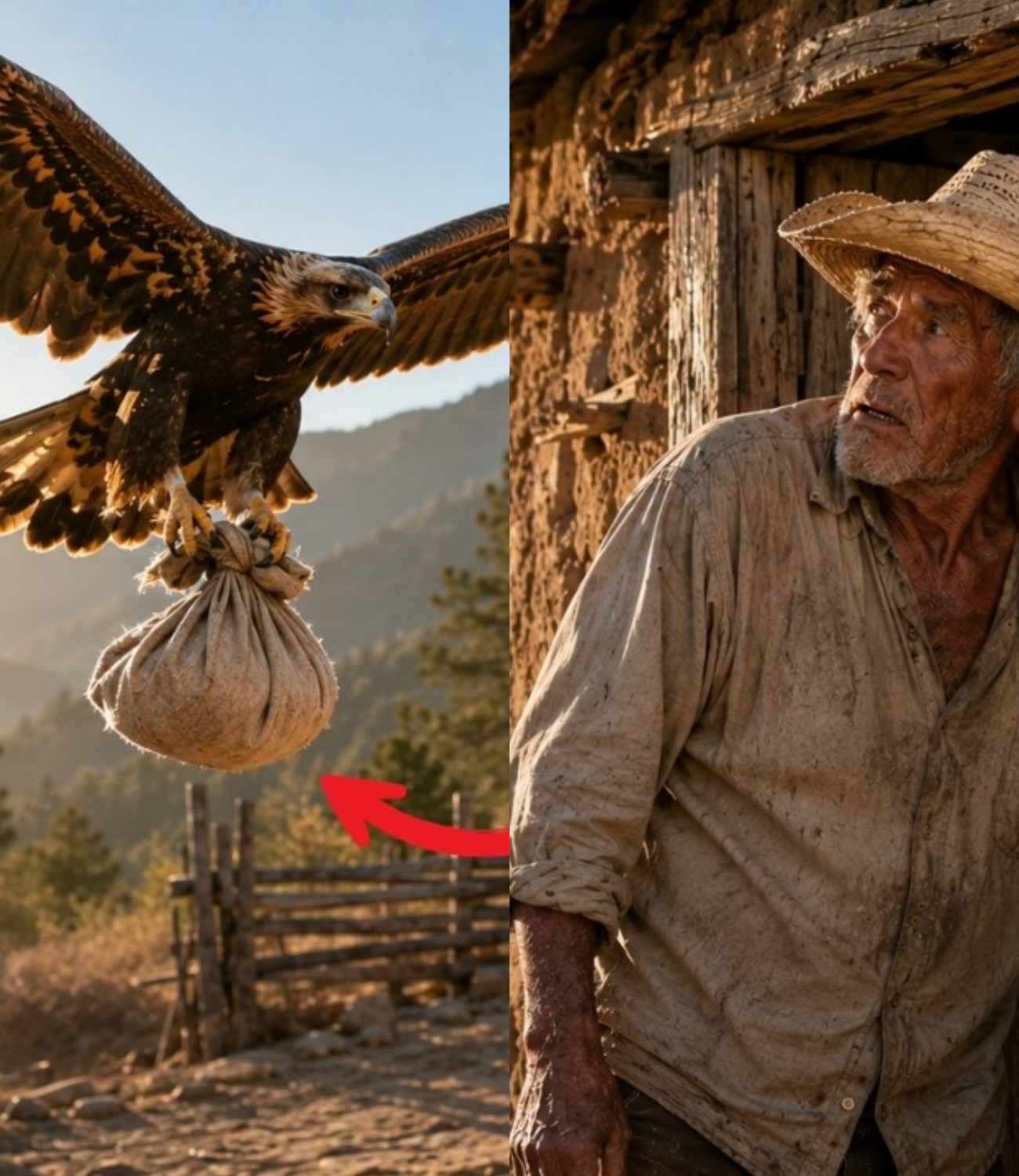
The other four men stopped what they were doing. Even the young boys who were leaning against the stone fence took a few steps forward. The eagle descended further. Now she was about One hundred meters off the ground, and what it carried in its talons was clear. A green pine branch. It wasn’t a small twig, one of those the wind tears off.
It was a thick branch, almost a meter and a half long, with fresh needles and a piece of bark hanging off. It had been ripped from some young tree, one of those that grow high up on the cliff, and it carried it as if it weighed nothing. ” What’s he going to do?” asked the youngest boy, the same one who yesterday had seen the trapped eagle and hadn’t lifted a finger.
His voice came out small, as if he were afraid the eagle would hear him. No one answered. The eagle broke away from the group and folded its wings. It stopped gliding and came diving straight toward us. The wind whistled through its feathers. The loggers froze . The leader muttered a curse under his breath.
One of the men crossed himself. I didn’t move. I don’t know why. Something in my chest told me I shouldn’t run. The eagle It passed less than 20 meters above our heads. I felt the air moving its wings, a dry, hot shock that ruffled my hair. The scent of the woods, of feathers, of something wild filled my nostrils.
And at that moment, just as it was above the white pickup truck, it opened its talons. The pine branch fell. It fell straight down, without any twisting, as if it had been aimed. It crashed against the truck’s roof with a thud that echoed throughout the valley. Pine needles flew through the air and were scattered across the windshield, the hood, the ground.
A strong smell of resin mingled with the dust of the road. The silence that followed was heavier than the impact. The other six eagles continued circling in the sky without descending, without making a sound. They just watched. The bald man was pale. His stained-toothed smile had completely vanished. He stared at the branch on the truck’s roof , the green needles, the piece of bark hanging. Then he looked at the sky.
Then he looked at me. “ What is this, Mendoza?” he asked. And it was the first time he hadn’t spoken to me mockingly. I didn’t know what it was either, or rather , I knew, but I couldn’t find the words to put it. It wasn’t an attack. The eagle hadn’t touched us. It could have swooped down on any of us, and it didn’t.
What it did was leave a green pine branch on the truck that was going to haul the pines from the forest, like someone laying an offering, like someone marking their territory, like someone saying, “This is off-limits.” The young man took three steps back, still looking at the sky. “I’m leaving,” he said. “This isn’t right.
” “ What do you mean it isn’t right?” the Herrero shouted, grabbing his arm. “What are you afraid of? A bird?” “It ‘s not a bird,” the young man replied, his voice no longer trembling. “It’s the mountain. And the mountain is saying something.” He let go of the arm and walked quickly down the dirt road without turning around.
The other men looked at each other. From the scar on his eyebrow, he dropped the chainsaw to the ground. The strongest man put his hands in his pockets. The fourth, a thin man who hadn’t spoken all day, stared at the pine branch, his eyes wide. The foreman bent down and lifted the branch from the truck’s tarp.
He held it with both hands as if it weighed more than it looked. The pine needles stuck to his fingers. He stared at it silently for a while . I still hadn’t moved from the gate. My left shoulder throbbed. My hands still burned where the pliers had cut my skin. But inside I felt something that wasn’t pain, it was something else, a quiet, deep certainty that didn’t need words.
The white-winged female was still in the sky, lower than the others. It seemed to me that she was looking at me across the distance, through the sun, through everything. Those amber eyes were fixed on me. ” Get in,” the foreman said suddenly in a voice that It was no longer the man who arrived laughing at the ranch.
“We’re leaving.” “And the chainsaws?” asked the man with the scar. “Leave them, we’ll pick them up later.” But from the way she said it, I knew they were n’t coming back for them. The men stirred as if waking from a deep sleep. The gero threw the pine branch into the truck bed with a brusque gesture, as if he was burning to get rid of it.
But he did n’t throw it on the ground; he left it on the tools, among the ropes and hooks, and never looked at it again. The other four got on without speaking. The one with the scar on his eyebrow was the last to do it. After picking up the two chainsaws that had been left lying on the ground , he carried them carefully, almost reverently, as if they now weighed twice as much.
I hadn’t moved from the gate. My shoulder throbbed, my hands burned, but I didn’t care about any of that. What mattered to me was up there . The seven eagles continued to trace slow circles above the forest. The white-winged female stayed lower than the others, gliding just about 50 m above the ground.
He couldn’t take his eyes off me. I knew it, even though I couldn’t see his pupils from that distance. There are things that one simply knows, like knowing when it’s going to rain or when a cow is about to give birth. That eagle was looking at me, and there was no threat in its gaze . There was something older, something I had no words to name.
The engine of the white truck started with a roar that startled two crows perched on a dry pine tree by the side of the road. The red truck followed her. The two of them started walking away along the dirt road, swallowing dust, shrinking into the vastness of the valley. The boys who were leaning against the stone fence watched them leave. No one said anything.
No one moved from where they were. Don Evaristo, the oldest of the chosen ones, was the first to turn towards me. He raised his mesquite staff and pointed it towards the sky, towards the eagles that continued to circle overhead. “I sing,” he shouted to me from afar with that raspy voice that comes from years in the mountains.
” Those eagles are watching over you.” I did n’t answer him, not because I had nothing to say, but because the answer was up there , not in my mouth. The eagles stayed a while longer. Then, one by one, they climbed up to the rocky outcrop overlooking the spring. The first to leave was a young female with lighter plumage, then a huge male with wings so wide that for a moment they blocked the sun.
Then another female, then two more. Then the sixth one traced a final circle and rose into the clouds. The white-winged female was left alone. It glided slowly, without flapping, taking advantage of the hot air currents rising from the canyon. He went back and forth over the ranch like someone surveying a territory, like someone taking possession of something without asking permission.
Every now and then it would go down a little more, until I could see that white feather on its right wing again , shining in the sunlight that was already beginning to fall behind the pine trees. The chosen boys gradually left. First the two who worked at the sawmill, then the young man who had ignored the eagle the day before, who walked away alone, with his head down, without turning around.
Don Evaristo was the last to leave. He stood for a long time leaning on his cane, looking at the sky. Then he turned around and disappeared down the chosen path. I was left alone, absolutely alone, for the first time all day. The sun was setting behind the crag. The sky turned a bright orange, a color only seen in the mountains when the day is about to end.
The shadows of the pine trees lengthened across the land. The cattle settled themselves into the corral, and the eagle was still there, silently gliding over my ranch. I sat down on the mesquite trunk I use as a bench next to the gate. I took off my palm hat and put it on my knees.
I ran my hand over my face, feeling the dust from the road mixed with sweat. My shoulder hurt less. Or maybe it was me who was no longer paying attention to him . Up there , the eagle stopped gliding. She hovered in the air for a second with her wings open, suspended as if the wind were holding her with its hands. Then he turned his head towards me.
I ‘m sure he did. Across the distance, through the orange light of the sunset, those amber eyes found me. And then, without making a sound, it rose up towards the cliff. In less than a minute it was a small dark speck against the sky. Then nothing. The mountain fell silent. A clean, deep silence, the kind that doesn’t weigh you down, but rather shelters you.
I sat there until the last light went out behind the saw. Then I got up, picked up my hat, and walked toward the ranch. Before entering, I paused for a moment by the door. The chainsaws were still lying by the roadside, gleaming in the first light of the stars. I did n’t pick them up. There would be time for that tomorrow.
That night I left the ranch door open. Not because it was hot, but because something deep inside me told me I had nothing to fear. I lay down on the canvas cot, under the tin roof that creaks when it’s cold, and stared through the open door at the patch of starry sky that could be seen. At some point, just before I fell asleep, I heard something, a distant, high-pitched sound, coming from the direction of the crag.
It wasn’t a hunting cry, it wasn’t an alarm call, it was something else. It was a long, sustained whistle that slowly faded away into the night. I recognized him. It was the song of a golden eagle. I closed my eyes and for the first time in many years I slept peacefully. The sun woke me up. It wasn’t the rooster’s crowing that remained silent that day .
It wasn’t the barking of the chosen one’s dogs, who didn’t bark either. It was the light, a clean, orange light, that came in through the open door of the ranch and hit me straight in the face. I lay on the cot for a while listening to the silence. A strange silence, the kind you do n’t hear often. Not a cicada, not a vulture, just the air passing between the pines.
I got up slowly. My shoulder didn’t hurt anymore. My hands had dry scabs where the pliers had cut me, but they no longer burned. I splashed some water on my face, put on my shirt, and went out to the corral. The first thing I saw were the chainsaws lying by the roadside where the loggers had left them.
They were still there, glistening with the morning dew. No one had come back for them. And then I looked up . Above the roof of the cellar, at the highest point of the sheet, there was a standing shadow, large, still. The sun shone down on it and made all its brown feathers shine, except for one. a white spot on the right wing.
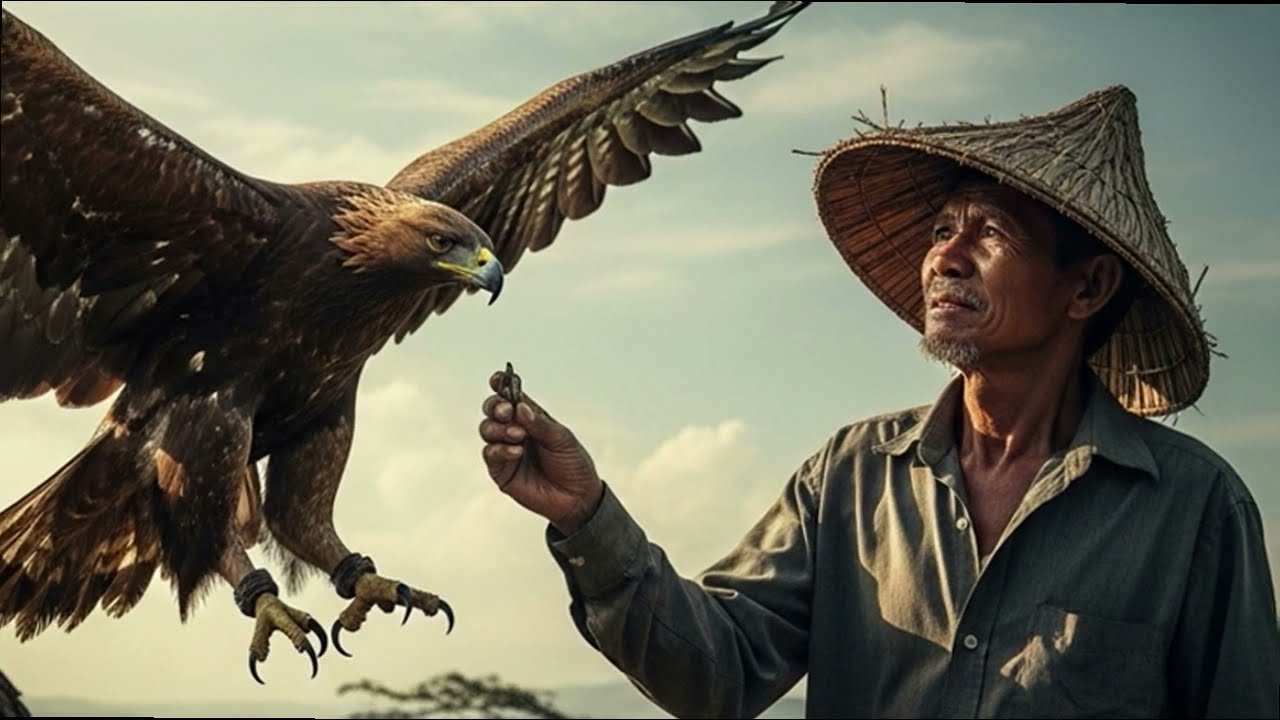
It was her. I stood still about 5 meters away without making a sound. The eagle turned its head. Those amber eyes found me just like the afternoon before, just like when I was tangled in the barbed wire. He didn’t move. Me neither. ” Good morning, young lady,” I said in a low voice. The eagle blinked. Then it opened its wings, those wings that block out the sun, and let go of the roof.
It didn’t fly away suddenly. It glided slowly down , passed less than 3 meters from me, and circled over the corral. The air moved by its wings ruffled my hair again, but differently than I had felt it yesterday. This time it wasn’t a warning, it was something else, like a greeting. Then it rose towards the crag and disappeared into the clouds.
That’s how the first morning went, and then the second and the third. And all the mornings that followed. Every day at dawn, the white-winged female perched on the roof of the cellar. Sometimes he would stay for 5 minutes, sometimes 10. He always looked at me, he always made himself visible.
And then he would go to the Rock, where the other six eagles had stayed to live. The cattle were not frightened. The calves continued ruminating as if nothing had happened. It even seemed as if the cows had gotten used to that big shadow that crossed the sky every morning. The water in the eye never dried up. The pine trees stayed where they were, their roots firmly planted in the ground, protecting the stream as they always had.
The manager never returned, he did n’t send anyone. The chainsaws were left lying around for a whole week until one day the young chosen one, the same one who had seen the trapped eagle and had done nothing, came and asked my permission to pick them up. He took them away wrapped in a sack without lighting them.
He said he was going to return them to the sawmill. I never knew if he did, but from that day on, every time we met , he greeted me respectfully. Don Catarino, the Egidal commissioner, showed up at the ranch one Friday afternoon. He came alone, without papers, without the assembly’s exchange. He sat down on the mesquite trunk I have next to the gate and remained silent for a good while.
Then he said to me, “Crisanto, what did you do?” I stared at the cliff. The white-winged female was up there, silhouetted against the blue sky. ” Nothing,” I replied. “I just took some wire from a girl who needed it.” Don Catarino scratched his beard and said nothing more. He got up, walked away along the dirt road, and never bothered anyone again.
The news spread like wildfire. I don’t know who told it, but in less than a month everyone knew that Crisanto Mendoza’s ranch was protected by seven golden eagles. Some said it was a pact with the mountain, others that it was a divine punishment that had turned into a blessing. The boys who had ignored the eagle tangled in the wire that afternoon didn’t talk about it, but every time they passed near the ravine, they looked up at the sky.
One afternoon, well into the rainy season, I was rounding up some cattle that had wandered into the woods. I passed by the same place where I had found the trapped eagle. The wire of The barbed wire was gone. Someone had removed it, but the old post remained , crooked, stained with rust. I paused for a moment, and then I remembered.
Weeks before the rescue, I had been seeing a large bird circling the cliff. I saw it almost every afternoon as the sun went down. I thought it was a vulture. It wasn’t a vulture; it was her. She had been watching me long before I found her. She had been sizing me up, like animals in the mountains do when they want to know if someone is trustworthy.
The pact didn’t begin when I removed the wire. It began long before. It began when she decided this ranch was her territory, too. I only finished what she had started. That afternoon, I walked slowly back to the ranch with the cattle behind me. And when I reached the gate, I looked up .
Up there on the cliff, seven shadows traced circles against the red sunset sky. Today, every time the sun rises, the white-winged female… It perches on the roof of the barn. It looks at me, I look at it, and then it flies off in a way that no longer frightens anyone, because everyone knows that Crisanto Mendoza’s ranch is guarded by seven golden eagles who need no papers or words to do what the mountain asks of them.
If this story touched you, subscribe to the channel now, leave a like, and share it with someone who needs to hear it today. Your support is what brings these stories to more people. M.